When did we decide that families were supposed to scatter?
For the vast majority of human history, multiple generations lived under the same roof. Grandparents, parents, children — all sharing the load, the laughter, and the Sunday roast. It’s only in the last seventy-odd years that the “nuclear family” model became the supposed gold standard. Two parents, two kids, one house, one mortgage, one fence keeping everyone else out.
That experiment is unravelling. And for a growing number of Australian families, it’s being replaced by something far more practical, financially intelligent, and — if designed well — genuinely enjoyable to live in.
The multi-generational home is making a serious comeback, and not because families are settling. They’re doing the maths.
What Is a Multi-Generational Home?
A multi-generational home is a property designed for two or more adult generations of the same family to live together. That might mean grandparents alongside their adult children and grandkids. It might mean ageing parents in a self-contained wing. Or a young couple staying on the family property while they build up a deposit of their own.
The defining feature isn’t just who lives there — it’s how the home is designed to support it. A successful multi-generational home balances communal areas (big kitchens, shared outdoor spaces) with private zones where each generation can close a door and exhale. Togetherness by choice, not by default.
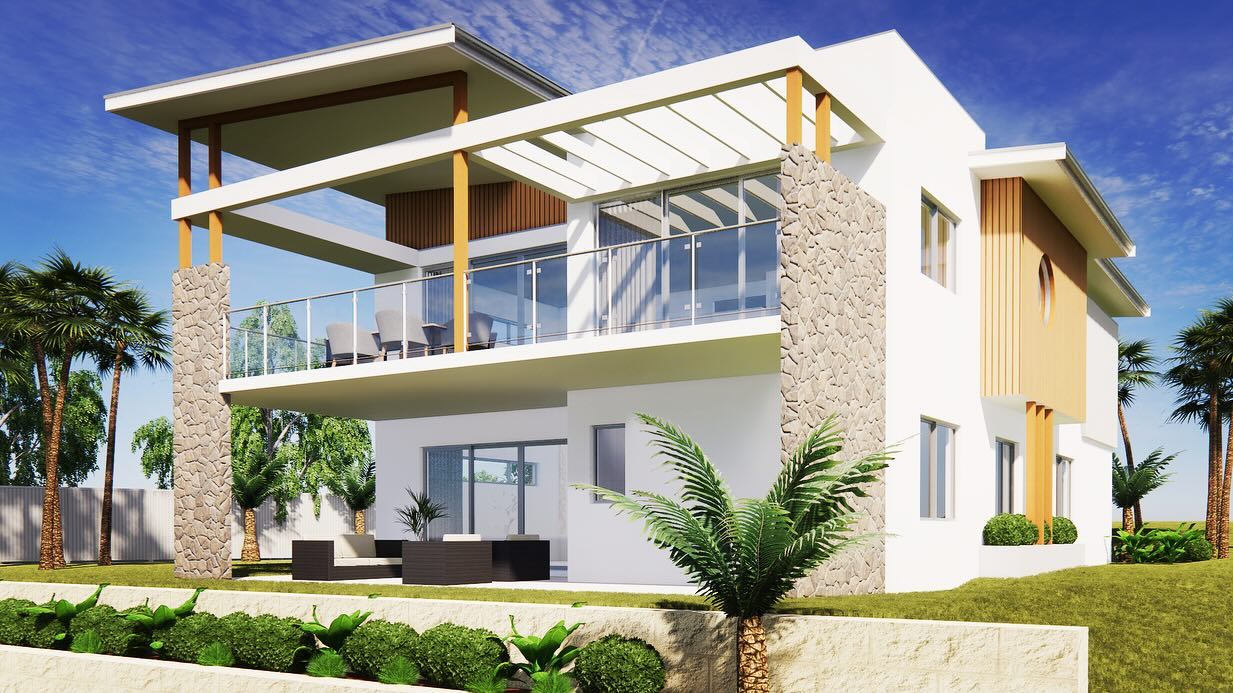
In Australia, this typically takes one of three forms: a main house with an integrated parents’ retreat or self-contained wing, a dual-key design (two dwellings under one roof with separate entrances), or a primary home with a detached ancillary dwelling — what most of us still call a granny flat.
The common thread? Thoughtful custom home design that treats privacy and connection as equally non-negotiable.
Why Are More Australian Families Choosing Multi-Generational Living?

This is far bigger than a niche trend. According to the 2021 Australian Census, roughly 335,000 households contained three or more adult generations living together — a 22 per cent jump from five years earlier. Research from UNSW’s City Futures Research Centre puts it more starkly: approximately one in five Australians now lives in a multi-generational household.
We’re well past the point of calling this a curiosity. Something structural is shifting. And it’s being driven by forces that aren’t going away anytime soon.
Housing Affordability Has Changed the Maths
Let’s not dress this up. The median house sale price in Perth hit $840,000 at the end of 2025 — a record high, according to REIWA. In Mandurah, the median sits around $570,000, which sounds more manageable until you hold it against the average local wage of roughly $67,000 a year. The National Housing Supply and Affordability Council reported that it now takes 10.6 years to save a home deposit nationally, and just 14 per cent of homes for sale are affordable to a median-income household. Fourteen per cent.
When the numbers look like that, pooling resources as a family isn’t sentimental — it’s arithmetic. One well-designed multi-generational home replaces two or three separate mortgages, two sets of council rates, two electricity bills, and two lots of building insurance. Families aren’t downsizing their ambitions. They’re consolidating buying power into a single asset that builds generational equity instead of treading water across three separate properties.
The Aged Care Question Nobody Wants to Face
The average Refundable Accommodation Deposit for residential aged care in Australia sits around $470,000, according to the federal government’s My Aged Care data. On top of that, residents pay a basic daily fee of roughly $65 per day — about $24,000 a year — plus means-tested care fees that can push total costs well beyond $60,000 annually.
And that’s just the financial picture. The 2019 Royal Commission into Aged Care Quality and Safety pulled back the curtain on widespread system failures that made front-page news and stuck in the memory of every family who read them. Between 78 and 81 per cent of Australians aged 55 and older now say they want to remain in their own home as they age, according to AHURI research. It’s hard to blame them.
Building a self-contained wing or ancillary dwelling for ageing parents costs a fraction of residential care over time — and keeps the people you love where you can actually see them, not behind a sign-in desk. For families exploring home designs for seniors, it’s fast becoming the obvious move.
Adult Children Are Coming Home — And Staying Longer
The Australian Institute of Family Studies found that 51 per cent of men aged 20 to 24 lived with their parents in 2021, up from 46 per cent in 2006. For women, it jumped from 36 to 43 per cent. These aren’t teenagers lingering. They’re young adults navigating a housing market that moved the goalposts while they were still at university.
For many families, keeping adult children at home isn’t a failure to launch — it’s a launchpad. A deliberate period of lower living costs that lets the next generation pay down HECS debt, stack a deposit, and step into the property market from strength rather than scrambling from behind.
It Was Never Strange for Everyone
Multi-generational living never went away for a significant portion of Australians. Families with Southern European, Asian, Middle Eastern, and Indigenous heritage have long maintained traditions of intergenerational co-residence — not as an economic workaround, but as a way of life. A 2023 study in the Australian Geographer documented Lebanese Australian families preserving Bayt Al-Ayleh — the family house — across generations.
What’s changed is that the broader mainstream is catching up. UNSW researcher Dr Edgar Liu notes that two-thirds of multi-generational households are now Australian-born. The stigma has faded, and in its place is a pragmatic recognition that these families were onto something all along.
The Real Benefits of a Multi-Generational Home
The decision to build a multi-generational home rarely comes down to a single reason. It’s usually a combination of financial pressure, family circumstances, and a dawning realisation that the benefits stack up in ways most people don’t expect until they’re living it.
Financial Benefits That Actually Add Up
The savings go well beyond splitting a mortgage. A two-generation household eliminates or reduces a second set of utility bills (easily $3,000 to $5,000 per year per dwelling), duplicate insurance premiums, and the single largest discretionary expense hanging over most young families — childcare.
Full-time centre-based childcare in Western Australia averages around $14 per hour according to ACCC childcare monitoring data, which translates to $30,000 to $50,000 per year before subsidies for a single child. When grandparents live under the same roof, even two or three days of informal care per week redirects tens of thousands annually. That money doesn’t evaporate — it flows into mortgage principal, superannuation, or the grandchildren’s education. It stays in the family instead of leaving it.
Built-In Family Support and Caregiving
In a well-functioning multi-generational home, care moves in every direction. Grandparents handle school pickups. Adult children keep a quiet eye on mum’s changing mobility. Children grow up absorbing intergenerational richness that no after-school program can manufacture.
And the evidence suggests the benefits run deeper than convenience. Research cited by SBS Australia found that grandparents who regularly care for grandchildren score higher on memory and verbal fluency tests — their brains stay sharper because they’re being used. For grandchildren, international studies link multi-generational upbringing to stronger cognitive development, which neuroscientists call a “cognitive reserve” that may protect against decline decades later. Everyone in the house is better off for being there.
Combatting the Loneliness Crisis
Australia has a loneliness problem, and it’s more than uncomfortable — it’s medically dangerous. The Australian Institute of Health and Welfare reports that 46 per cent of Australians aged 75 and older rate their social support as “low.” A 2024 paper in the Medical Journal of Australia found that loneliness increases premature death risk by 26 per cent, putting it in the same risk category as smoking or physical inactivity.
Multi-generational living doesn’t fix loneliness through grand gestures. It works through the ordinary stuff: a cup of tea across the kitchen bench, a grandchild’s drawing stuck to the fridge, the background sound of another person moving through the next room. Those daily interactions might seem small, but the research says they’re genuinely life-extending.
Smart Design Ideas for Multi-Generational Homes
This is where intention has to meet architecture. A multi-generational home that works long-term isn’t a standard house with an extra bedroom tacked on the back. It demands deliberate decisions from the first sketch — decisions that account for how your family lives now and how it’ll live in twenty years. Perth architect Neil Cownie puts it well: “It is designing for coexistence with opportunities to overlap.”
1. Zoned Living: Separate Wings or Levels
The most effective floor plans create distinct “wings” or zones. The parents’ retreat might occupy one end of the home (or the ground floor of a double-storey build), while secondary bedrooms, a rumpus room, and a home office sit at the other.
The key principle is separation without distance. Each generation reaches shared spaces easily, but nobody walks through someone else’s private zone to get there. Separate entrances take this further, giving each household the dignity of its own front door — a small detail that changes the psychology of the entire arrangement.
2. Dual-Key Designs
Increasingly popular across Western Australia, a dual-key home is two self-contained dwellings under a single roof and property title. From the street, it reads as one house. Inside, it’s divided into a larger primary residence and a smaller secondary unit, each with its own kitchen, bathroom, living area, and entry.
What makes this design so compelling is the flexibility. The secondary dwelling can house ageing parents today, a returning adult child tomorrow, and generate rental income the year after that. For families investing in a custom-designed home, it’s one of the smartest long-term plays available.
3. Ancillary Dwellings (The Modern Granny Flat)
Western Australia made a significant regulatory change in April 2024. Under updated R-Codes, ancillary dwellings of up to 70 square metres can now be built on any residential lot — with no minimum lot size requirement. The previous 350-square-metre minimum has been scrapped. And if the dwelling meets all deemed-to-comply provisions, it requires only a standard building permit, no separate planning approval.
That means a fully self-contained one-bedroom dwelling with its own kitchen, bathroom, and living area can potentially be approved in as little as 10 business days. For families in Mandurah and the Peel Region who want to keep parents close without the complexity of subdivision, it’s removed one of the biggest barriers that used to stand in the way.
4. Universal Design: Building for Every Stage of Life
Universal design ensures a home works for everyone — from a toddler taking first steps to a 90-year-old with a walker — without feeling clinical.
The practical elements: step-free entries, wider doorways (minimum 820mm clear opening), lever-style handles, a ground-floor bedroom with ensuite, hobless showers, and reinforced bathroom walls for future grab rails. The Australian Building Codes Board found that building these features during construction is up to 22 times more cost-effective than retrofitting later, which makes the case for getting it right from the start pretty hard to argue with.
While Western Australia hasn’t yet mandated the NCC 2022 Livable Housing Design Standard, any custom builder worth their salt will recommend building to these standards voluntarily. A multi-generational home needs to work for the next 30 years, not just the next three.
5. Shared Gathering Spaces That Earn Their Keep
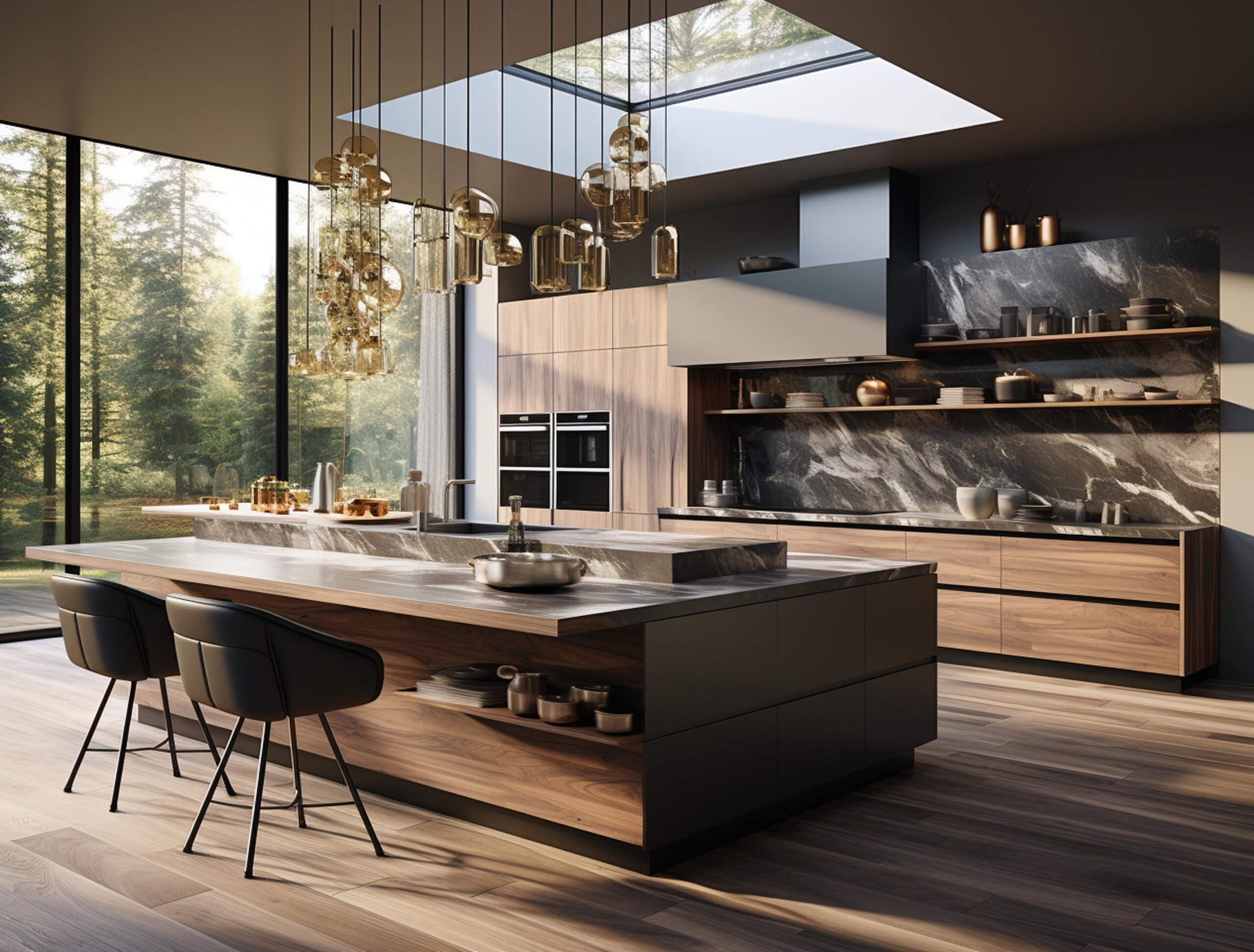
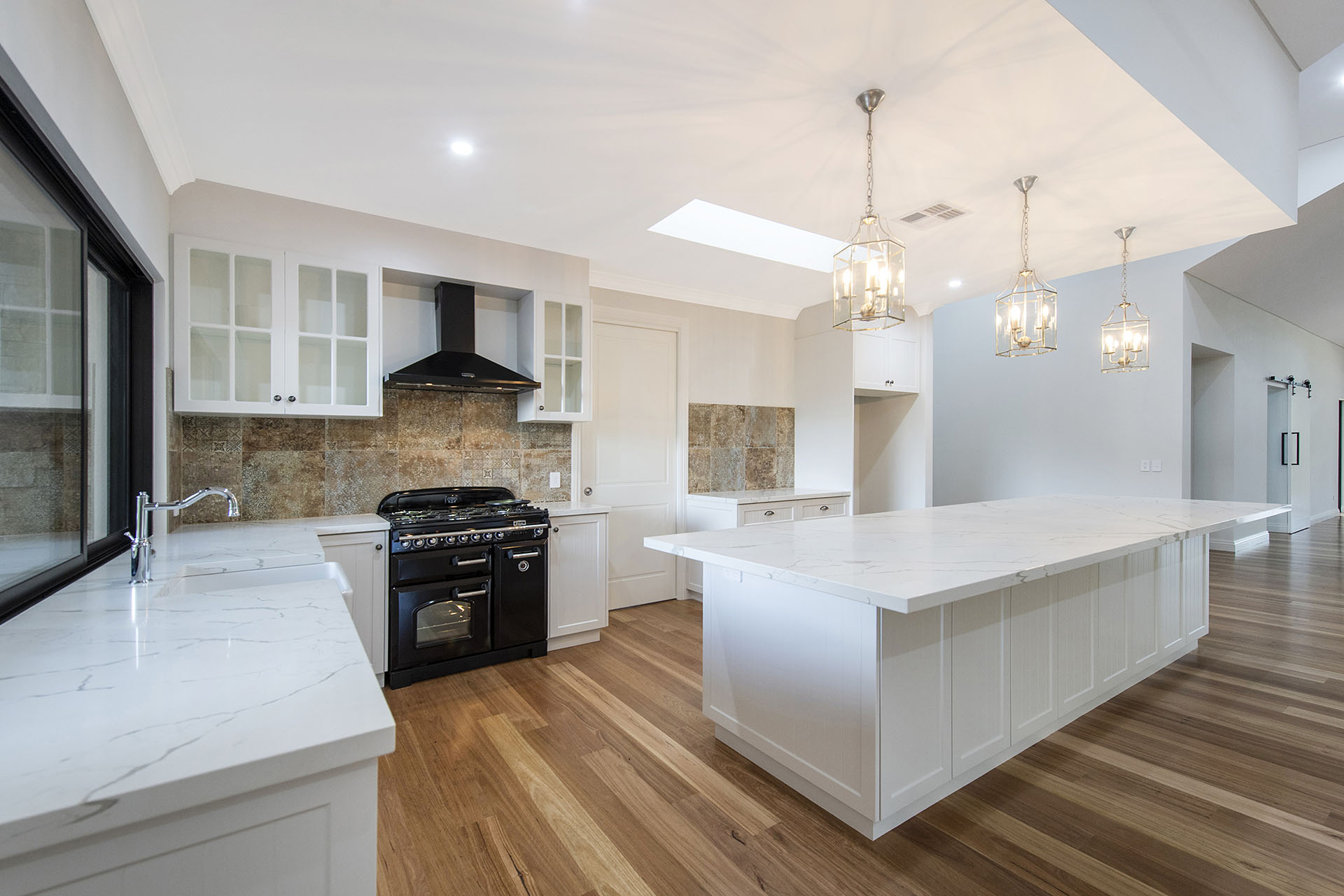
The heart of any multi-generational home is where the family chooses to be together. That usually means an oversized luxury kitchen with a generous island bench, an open-plan living area flowing to a covered alfresco zone, and outdoor spaces designed for daily use rather than weekend photo opportunities.
In Mandurah’s climate, outdoor living isn’t a nice-to-have. A well-designed alfresco effectively doubles your communal living space for eight months of the year, and skimping on it is something families tend to regret by their first summer.
6. Acoustic Privacy: The Insulation Your Relationships Need
Ask anyone who’s lived with extended family what causes the most friction. It’s rarely the big things. It’s Grandad’s television at 7 am, the teenager’s music at 11 pm, and the toddler’s 5 am wakeup reverberating through the floorboards.
Getting acoustic privacy right is non-negotiable: solid-core internal doors, high-density insulation in shared walls, sound-deadening underlayment between floors, and zoned HVAC ducting that doesn’t carry conversations from one end of the house to the other. These details might not make the Instagram reel, but they’re the difference between a household that works and one that slowly wears everyone down.
7. Flexible Rooms That Evolve With Your Family
A room near the entry with an adjacent bathroom might serve as a home office today, a playroom next year, and a grandparent’s bedroom in a decade. Flexible spaces are among the most underrated features in a multi-generational home, because families change in ways you can’t fully predict at the design stage.
The trick is building in the infrastructure before you need it — plumbing provisions, structural reinforcement for future partitions, wiring for a potential kitchenette — so conversion later takes weeks, not a six-month renovation that displaces half the household.
What to Consider Before Building a Multi-Generational Home in WA
Before anyone sketches floor plans on a napkin, a few practical realities specific to Western Australia will shape every decision.
Planning and Approvals
The 2024 R-Code reforms have simplified ancillary dwelling approvals, but local planning policies still layer on top. In the City of Mandurah, canal-front properties carry specific setback requirements (minimum 4 metres, average 6 metres from the canal wall), and building within 6 metres requires professional engineering certification. If you’re considering a canal home build, these details matter from day one.
Coastal Conditions and Material Selection
Mandurah’s coastal environment is stunning to live in and relentless on buildings. Salt air corrodes standard metals, UV degrades coatings fast, and fine coastal sand acts as a natural abrasive on every exposed surface. A multi-generational home here needs marine-grade stainless steel fixings (Type 316), salt-resistant coatings, fibre cement or rendered masonry cladding, and coastal-rated HVAC with coated condenser coils. None of that is optional if you want your custom home to stand strong in thirty years.
Block Size and Orientation
A multi-generational home demands more careful site planning than a standard build. Northern orientation for passive solar gain, separation between private zones, outdoor space serving both dwellings, and vehicle access for multiple households all need resolving before the slab is poured. On a narrow or irregular block, this is where single-storey versus double-storey decisions become critical. For families on an established block that no longer fits how they live, a demolition and rebuild can be the most efficient path forward.
How D.A. Burke Builders Approaches Multi-Generational Home Design
If you’ve read this far, you’re likely weighing up whether this could work for your family. That’s exactly the conversation we have every week.
We’re a family-owned custom luxury home builder based in Mandurah with over 40 years of experience across three generations of builders. Directors Daryn and Matt Burke are qualified carpenters who still walk your site, not salespeople reading from a brochure. When we say “builders, not salesmen,” it’s how we’ve operated since day one.
We’ve built homes across the Peel Region — from canal-front properties in Wannanup and Dawesville to rural builds in North Dandalup and Waroona. Our Halls Head luxury home features dual kitchens on both levels and a residential lift, designed from the ground up for multi-generational living. It’s not a concept on a mood board. It’s built and being lived in.
Every one of our homes starts with a genuine conversation about how your family actually lives — because a home designed for three generations of your family shouldn’t look like anyone else’s.
Ready to explore what a multi-generational home could look like for your family? Get in touch with our team for a no-obligation consultation. We’ll visit your block, understand your family’s needs, and show you what’s possible.
You can also browse our completed projects or learn more about our design process.
The Takeaway
A multi-generational home isn’t a step backwards. It’s a forward-looking decision that takes on three of the biggest pressures bearing down on Australian families: housing affordability, the cost and quality of aged care, and the quiet epidemic of loneliness that statistics are only beginning to capture.
But it only works if the design works. Privacy, acoustic separation, universal accessibility, and flexibility aren’t optional extras in a multi-generational build — they’re what hold the whole thing together. Get them right, and you’ve got a home that keeps a family close without wearing it thin.
If you’re thinking about building a home that serves your whole family — not just for the next five years, but for the next thirty — start a conversation with D.A. Burke Builders. The best forever homes are the ones designed around how your family actually lives.
Frequently Asked Questions
What is the difference between a multi-generational home and a dual-key home?
A multi-generational home is any property designed for two or more adult generations to live together — it’s a broad category. A dual-key home is a specific type within that: two self-contained dwellings (each with its own kitchen, bathroom, and entrance) under a single roof and property title. All dual-key homes are multi-generational, but not all multi-generational homes are dual-key. Some use separate wings, ancillary dwellings, or flexible layouts instead.
Do I need council approval to build a granny flat in Mandurah?
Since April 2024, ancillary dwellings of up to 70 square metres that meet all deemed-to-comply provisions under the WA R-Codes generally require only a building permit — no separate planning approval. However, if the dwelling exceeds 70 square metres, doesn’t meet setback or open space requirements, or has heritage considerations, planning approval may still be needed. Always confirm with the City of Mandurah or your builder before committing.
How much does it cost to build a multi-generational home in WA?
Building costs in Perth and the Peel Region currently range from approximately $1,800 to $4,500 per square metre, based on HIA and industry data. A custom multi-generational home with a self-contained secondary dwelling will sit at the higher end due to the additional kitchen, bathroom, and services required. The best approach is to speak with a custom builder early to get a realistic scope based on your specific needs and block.
Can a multi-generational home increase my property value?
Yes. Homes with self-contained secondary dwellings or dual-key configurations attract a broader buyer pool, including investors, extended families, and downsizers. Research from InvestorKit found that adding a granny flat can increase rental yield by 1.4 to 1.65 percentage points. The key is quality — a well-designed, properly consented multi-gen home adds genuine value, while a poorly executed conversion can deter buyers.
What are the most important design features for a multi-generational home?
Separate entrances for each living zone, acoustic insulation between shared walls and floors, a ground-floor bedroom with ensuite (essential for ageing in place), flexible rooms that can change purpose over time, zoned climate control, and generous shared spaces — particularly a large kitchen and covered outdoor area. Universal design features like step-free access and wider doorways should be built in from the start, regardless of the family’s current needs.